AVANSA® › AVANSA heating circulation pumps for radiators and underfloor heating
AVANSA® · circulation pumps

AVANSA heating circulation pumps for radiators and underfloor heating

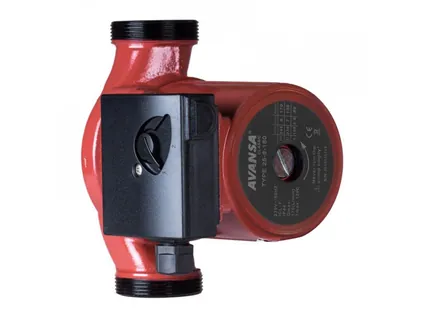
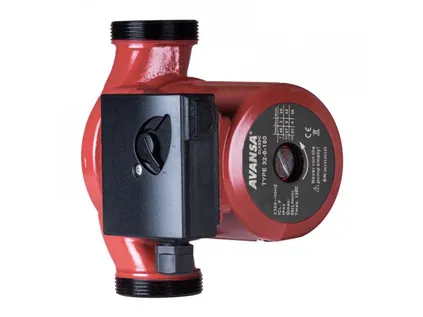
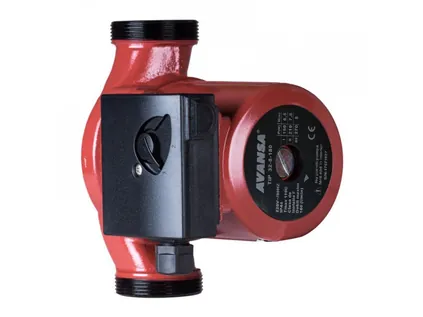
Three-speed circulation pumps with a cast-iron body for radiator and underfloor heating circuits. 8 models with 4, 6 and 8 m head, 130 or 180 mm installation length and 1", 6/4" or 2" connections – sold with expert advice via the ATRIASHOP.EU online store.

updateUpdated: verifiedTechnically reviewed by the ATRIA SK s.r.o. technicians

speed3 speedsstraighteninstallation length 130 / 180 mmcompressmax. 10 bardevice_thermostatmedia up to 110 °Celectrical_services230 V, from 38 W
settingsDesign

What AVANSA circulation pumps are for

The circulation pump is the heart of any wet heating system – without it, hot water from the boiler would never reach all the radiators and underfloor heating loops evenly.

AVANSA circulation pumps are designed for central heating systems. They provide forced circulation of heating water between the heat source – a gas, electric or solid-fuel boiler – and the radiators or underfloor heating circuits. According to the manufacturer, they are also suitable for domestic water systems, industrial circulation equipment, and chilled water and air-conditioning systems. Most often, you will come across them as a replacement for an ageing pump in the boiler room of a family home.

Design: cast iron, asynchronous motor, three speeds

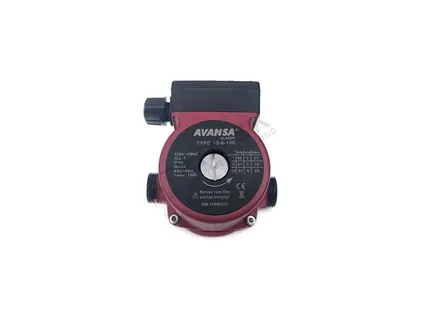
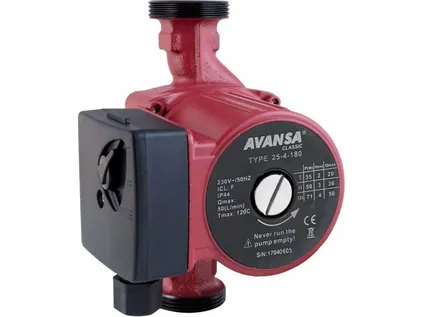
  • The pump body is cast iron, and the pump parts are made of cast iron and plastic. The 15/6/130 model, for example, has a cast-iron body with an anti-corrosion enamel top coat and a glass-ceramic bearing.
  • The motor is a high-quality bipolar asynchronous motor that does not require overload protection.
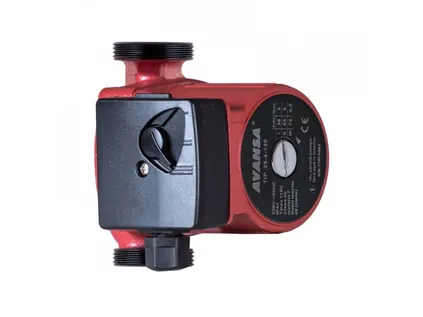
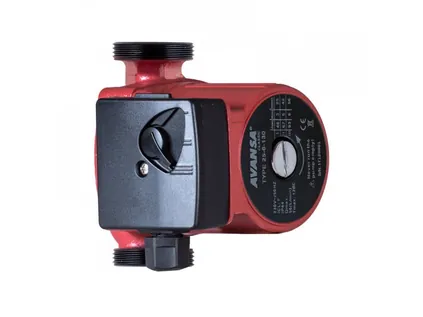
  • The three speeds are selected with a dedicated switch on the terminal box – so you can match the pump output to a specific system without replacing it.
  • Power supply 230 V / 50 Hz, IP44 protection, insulation class FH.

Common specifications across the range

  • maximum working pressure: 10 bar
  • media temperature: -10 to +110 °C
  • protection rating: IP44, insulation class FH
  • pump part materials: cast iron / plastic
  • version: 230 V

How to read the model designation

The name of each pump carries its three most important figures. For example, AVANSA 25/6/180 means:

  • 25 – nominal bore of the suction and discharge ports DN25 (mm),
  • 6 – head (delivery height) of 6 m,
  • 180 – installation length of 180 mm, i.e. the distance between the suction and discharge ports.

In online store descriptions you may also see the notation “AUTO 25/60” – here 60 corresponds to a 6 m head, just as 40 means 4 m and 80 means 8 m.

AVANSA pumps are classic three-speed pumps: simple, affordable and with a speed you set manually using the switch on the terminal box. Which setting to choose is explained below in How to choose the right pump.
water_dropRange

AVANSA circulation pumps – 8 models

All models have three speeds, a cast-iron body, a maximum working pressure of 10 bar and a media temperature range of -10 to +110 °C. They differ in installation length, nominal bore, head and flow rate. Prices and availability are loaded directly from the ATRIASHOP.EU online store.

table_chartComparison

Comparison of all AVANSA models

Technical data according to the manufacturer's documentation. Power input is given for speeds 1 / 2 / 3.

ModelInstallation lengthHeadPower input (W)Max. flow (l/min)ConnectionWeight
AVANSA 15/6/130130 mm6 m46 / 67 / 9345DN15, 1"2.5 kg
AVANSA 25/4/130130 mm4 m38 / 53 / 7248DN25, 6/4"2.7 kg
AVANSA 25/4/180180 mm4 m38 / 53 / 7248DN25, 6/4"2.7 kg
AVANSA 25/6/130130 mm6 m46 / 67 / 9355DN25, 6/4"2.8 kg
AVANSA 25/6/180180 mm6 m46 / 67 / 9355DN25, 6/4"2.8 kg
AVANSA 25/8/180180 mm8 m145 / 170 / 182115DN25, 6/4"4.5 kg
AVANSA 32/6/180180 mm6 m46 / 67 / 9355DN32, 2"3.0 kg
AVANSA 32/8/180180 mm8 m150 / 210 / 270160DN32, 2"3.0 kg

Current prices and availability are shown on the product cards above. Common specifications of all models: max. working pressure 10 bar, media temperature -10 to +110 °C, IP44 protection, 230 V.

settingsSpecifications

Technical specifications of AVANSA circulation pumps

Dimensions, connection and operating conditions of the individual models according to the manufacturer's descriptions. All AVANSA circulation pumps have a 230 V / 50 Hz supply and three speeds selected at the terminal box.

ModelDimensions H × W × DSuction / dischargeMax. working pressureMedium temperatureProtection, insulation
AVANSA 15/6/130not statedDN15, 1" thread10 barmax. 120 °CIP44
AVANSA 25/4/13013.5 × 17.5 × 14.5 cmDN25 / DN25, 6/4"10 bar-10 to +110 °CIP44, FH
AVANSA 25/4/18013.5 × 19.5 × 14.5 cmDN25 / DN25, 6/4"10 bar-10 to +110 °CIP44, FH
AVANSA 25/6/13013.5 × 17.5 × 14 cmDN25 / DN25, 6/4"10 bar-10 to +110 °CIP44, FH
AVANSA 25/6/18013.5 × 19.5 × 14.5 cmDN25 / DN25, 6/4"10 bar-10 to +110 °CIP44, FH
AVANSA 25/8/18019 × 16 × 15 cmDN25 / DN25, 6/4"10 bar-10 to +110 °CIP44, FH
AVANSA 32/6/18019.5 × 14.5 × 13.5 cmDN32 / DN32, 2"10 bar-10 to +110 °CIP44, FH
AVANSA 32/8/18019.5 × 14.5 × 15.5 cmDN32 / DN32, 2"10 bar-10 to +110 °CIP44, FH

Data according to the product descriptions in the ATRIASHOP.EU online store. For the 15/6/130 model, the manufacturer also states values for the individual speeds: head 3 / 5 / 6 m and flow 21 / 35 / 45 l/min; the body has an anti-corrosion enamel finish and the bearing is made of glass ceramic. CP 15-1.5 recirculation pump: DN15, G 1/2", installation length 85 mm, 10 bar, 5 – 95 °C, 25 W, 220 V.

checklistAdvice

How to choose the right circulation pump

Whether you are replacing a pump or installing a new one, four things matter: installation length, connection, head and flow rate. The first two are determined by your pipework, the other two by your heating system.

1. Installation length: 130 or 180 mm

The installation length is the distance between the pump's suction and discharge ports – in other words, the gap in the pipework into which the pump fits between two union connections. When replacing a pump, this is the most important dimension: the new pump should be exactly the same length as the old one. That way you simply swap it between the existing unions, without cutting or extending the pipework.

  • Measure the old pump from the sealing face of one port to the sealing face of the other (without unions and seals).
  • Result 130 mm → choose from the 15/6/130, 25/4/130 and 25/6/130 models.
  • Result 180 mm → consider the 25/4/180, 25/6/180, 25/8/180, 32/6/180 and 32/8/180.
  • This figure is often found directly in the type designation of the old pump (e.g. “…/180”) or on its rating plate.

A shorter pump can only replace a longer one if the pipework is modified or an extension piece is used – adding extra joints that may leak. A longer pump will not fit into a shorter gap at all without reworking the pipework.

2. Nominal bore (DN) and connection thread

The number at the start of the designation (15, 25, 32) indicates the nominal bore of the pump ports in millimetres. The pump is connected to the pipework via union connections whose nuts screw onto the thread on the pump body:

  • DN15 – 1" thread (AVANSA 15/6/130),
  • DN25 – 6/4" thread (all 25/… models),
  • DN32 – 2" thread (32/6/180 and 32/8/180 models).

Do not mix them up: the pump's connection thread (e.g. 6/4") is not the same thing as the port bore (DN25), nor as the pipe size in the boiler room. If the original unions stay in place, what matters is the thread on the pump body – it must match the union nuts. When changing to a different size, suitable unions or reducers are used.

3. Head of 4, 6 or 8 m depending on the house and type of system

The head (delivery height in metres) expresses how much pressure resistance the pump can overcome. It must cover the pressure losses of your circuit – these increase with the length of the pipework, the number of radiators or circuits and the resistance of the fittings (valves, mixing valves, filters). It has little to do with the height of the house: in a closed system, the water that goes up comes back down again, so the pump does not “lift” water to the upper floor, it merely keeps it circulating.

  • 4 m (25/4/130, 25/4/180) – smaller, simple systems: a flat, a smaller house, short pipe runs with fewer radiators. They also have the lowest power input (38 / 53 / 72 W).
  • 6 m (15/6/130, 25/6/130, 25/6/180, 32/6/180) – a typical family home; a pump with a head of up to 6 m is usually sufficient for an ordinary family house. The most versatile choice, including when replacing an older pump.
  • 8 m (25/8/180, 32/8/180) – larger and multi-zone systems, long pipe runs, bigger buildings and circuits with high resistance. They offer a much higher flow rate (115 and 160 l/min respectively), but also a higher power input.

Radiators vs. underfloor heating: a radiator circuit has shorter runs and lower resistance, so a 4–6 m pump is usually enough. Underfloor heating has tens of metres of pipe in each loop, a manifold with valves and often a mixing valve – the resistance is higher, so a 6 m pump is generally chosen for larger underfloor systems and 8 m for extensive areas or several manifolds. If in doubt, have a heating engineer size the flow rate and head – they will take into account the loop lengths and the required heat output.

4. Flow rate – how much water the pump moves

The maximum flow rate indicates how much water the pump can move when the system offers almost no resistance. Models with 4 and 6 m head reach 45 – 55 l/min, while the 8 m 25/8/180 and 32/8/180 reach up to 115 and 160 l/min respectively. For the 15/6/130 model, the manufacturer also gives values for the individual speeds: max. flow of 21 / 35 / 45 l/min and max. head of 3 / 5 / 6 m at speed 1 / 2 / 3. The real flow rate in a system is always lower than the maximum – it depends on the circuit resistance and the selected speed.

5. Setting the speed

The speed switch on the terminal box is the cheapest way to match the pump to the system. There is one simple rule: set the lowest speed at which all radiators or circuits heat up evenly.

  • After installation and bleeding, start at speed 1 and on a colder day check that even the most distant radiators warm up.
  • If the last radiator stays lukewarm, switch up one setting and check again after a few hours.
  • A lower speed means lower power input – for the 25/6 models, for example, it is 46 W at speed 1 compared with 93 W at speed 3, i.e. roughly half the electricity over the whole heating season.
  • A lower speed is also quieter – less noise in thermostatic valves and pipework.

6. Switching the pump with a thermostat

With a solid-fuel boiler, or when charging a buffer tank or hot water cylinder, the pump is often switched according to the temperature of the water in the pipe. This is what the AVANSA TH 2A clamp-on thermostat (230 V, range 20 – 90 °C) is for – it is attached directly to the pipe with a spring. It most commonly controls the boiler pump overrun, and in underfloor heating it is also used as a safety thermostat that switches the pump off. You will find an overview on the AVANSA thermostats page.

7. Noise

If you can hear rushing, whistling or gurgling in the system, the cause is more often in the system than in the pump itself:

  • air – the system or pump has not been bled properly (typically after filling or replacement),
  • speed set too high – the flow is noisy in the thermostatic valves; try a lower setting,
  • low system pressure – check the pressure on the boiler gauge and top up with water if necessary,
  • dirt and magnetite – a clogged rotor turns with more effort and more noise; a magnetic filter helps (see below).

Most common mistakes when choosing and replacing a pump

  • buying a pump based on head without measuring the installation length – 130 and 180 mm are not interchangeable,
  • confusing the nominal bore with the thread – a DN25 body has a 6/4" thread, not 1",
  • fitting an oversized 8 m pump “just to be safe” in a small house – higher power consumption and valve noise where 4 – 6 m would do,
  • mounting with the motor shaft vertical or against the flow direction arrow on the body,
  • starting without bleeding – running dry or with air damages the bearings,
  • replacing the pump in a sludged-up system without flushing and without a filter – the new pump will get clogged by the same sludge as the old one,
  • a solid-fuel boiler without backup power – during a power cut, circulation stops while the fire is still burning in the boiler.
Looking for another brand or other heating equipment? Browse the full range in the ATRIASHOP.EU online store. Installers and resellers will find wholesale terms at atria-europe.com.

homeUse

Use: where an AVANSA circulation pump is the right choice

The same three-speed pump can serve several places in the boiler room of a family home. What matters is which circuit it has to drive and what will switch it.

Solid-fuel boiler and accumulator tank

With a wood, coal or pellet boiler, the circulation pump carries heat from the boiler to the radiators or to the accumulator tank. Here the pump is a safety element: as long as the fire is burning, the water must circulate. The boiler pump is therefore often switched according to the water temperature by an AVANSA TH 2A clamp-on thermostat (range 20 – 90 °C), which switches it on once the boiler has warmed up and lets it keep running during the overrun period. In a system with a tank, the heating circuit after the tank usually has its own pump as well. Plan for power cuts in advance – an AVANSA boiler backup power supply keeps the pump running until the boiler has cooled down.

Gas or electric boiler with an additional circuit

Most wall-hung boilers have the pump built in. You need a separate circulation pump when another circuit leads off the boiler – for example underfloor heating via a mixing valve, charging a hot water cylinder or a branch to a second building. Each such circuit should have its own pump, and both the boiler and the pump can be switched by an AVANSA room thermostat.

Underfloor heating with a manifold

In underfloor heating, the pump pushes water through the manifold into loops tens of metres long, so the circuit has a higher resistance than radiators and a head of 6 m is usually chosen, or 8 m for larger areas. The pump is accompanied by a mixing valve that guards the water temperature and a TH 2A safety thermostat that switches the pump off if it overheats. The flow to the individual loops is set on the manifold – for example on an H.P.W.® brass underfloor heating manifold with flow meters. A heating installer can work out the number and length of the circuits in advance.

Several pumps in one boiler room

  • Each circuit (radiators, underfloor heating, water heater) has its own pump and its own switching.
  • With pumps connected in parallel, a non-return valve belongs after each pump so that one pump does not push water through the circuit of the other.
  • Fit shut-off ball valves before and after each pump – replacement then takes a moment and without draining the system.
  • A magnetic filter belongs in the return line before the boiler and pumps.

Other pipework

According to the manufacturer, the pumps are also intended for domestic water distribution, industrial circulation equipment and cold water and air-conditioning systems. For circulating drinking hot water, however, use the brass AVANSA CP 15-1.5 recirculation pump.

showerHot water

Hot water circulation – AVANSA CP 15-1.5

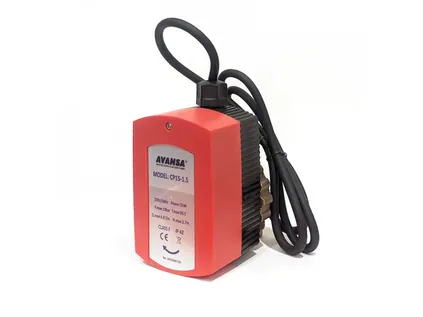
Hot water at the tap straight away, without running cold water down the drain. The AVANSA CP 15-1.5 circulation pump is designed for domestic hot drinking water.

Why circulate hot water

If the water heater or boiler is a long way from the bathroom or kitchen, opening the tap first delivers the cooled water that has been standing in the pipe, and you have to wait for it to run hot. A circulation pump keeps domestic hot water (DHW) constantly circulating between the cylinder and the taps, so hot water is available at the tap almost instantly. It saves time as well as the water that would otherwise go down the drain while you wait.

Circulation pump vs. heating circulator

The AVANSA 15/…, 25/… and 32/… pumps drive heating water around the heating circuit (radiators, underfloor heating). The CP 15-1.5 circulation pump is designed for drinking water: it has a brass body, a ceramic shaft and a permanent-magnet rotor, which allows efficient, economical and trouble-free operation with a power input of just 25 W and quiet running.

Installation and operation

  • The pump is usually installed in the circulation pipe upstream of the water heater or hot water tank.
  • G 1/2" connection thread, 85 mm installation length, temperature range 5 – 95 °C, max. pressure 10 bar.
  • The pump comes with a cable and plug – 220 V / 50 Hz power supply.
  • Circulation increases both electricity consumption and heat losses from the pipework, because the water is constantly moving. That is why you should add a timer switch that runs the pump only when hot water is actually needed – in the morning and evening, for example.
  • We recommend leaving the connection to the DHW pipework and the electrical supply to a plumber or electrician.
buildInstallation

Replacing a circulation pump step by step

A competent DIYer can handle the replacement if the boiler room has isolating valves both before and after the pump. We recommend leaving the electrical connection and any work on the boiler to a professional.

1. Switch off and let it cool down

Switch off the boiler and disconnect the pump from the power supply (circuit breaker or socket). With a solid-fuel boiler, wait until the fire has gone out completely and the boiler has cooled – never replace a pump while the heating is running.

2. Close the valves

Close the ball valves before and after the pump. If there are none, you will need to drain at least part of the system. Have a bucket, cloths and new seals for the unions ready.

3. Remove the old pump

Take a photo of the wiring on the terminal box (live L, neutral N, protective earth PE), disconnect the cable and loosen the union nuts. Residual water will run out – it may be warm and dark with sludge.

4. Compare the dimensions

Check that the new pump has the same installation length (130 or 180 mm) and thread (1", 6/4" or 2") as the old one. Clean the sealing faces of the unions and always use new seals.

5. Fit the pump correctly

The arrow on the pump body must point in the direction of water flow. The motor shaft must be horizontal – do not install the pump with the motor facing up or down. The terminal box should not face downwards, so that water cannot get into it. Tighten the nuts with care.

6. Connect the power

Connect the 230 V supply, including the protective earth, according to the instructions. We recommend leaving the connection to the boiler's electrical installation to an electrician or heating engineer.

7. Refill and bleed

Open the valves, check the system pressure on the gauge and top up with water if necessary. Bleed the radiators and the pump according to the instructions – the pump must not run dry or with air in the rotor.

8. Start up and set the speed

After starting, let the pump run at a higher speed for a while to drive out any remaining air, then switch it to the lowest setting at which the whole system heats up evenly.

9. Check again after a few days

After a few days of operation, check the unions for leaks, the system pressure and the noise level. If air appears in the radiators again, bleed them once more.

filter_altPump protection

Protect your pump – magnetic filters

Magnetite is the most common enemy of circulation pumps. A magnetic filter captures it before it reaches the pump and the boiler.

Why magnetite destroys pumps

In a system with steel radiators and pipes, slow corrosion takes place. Its by-product is a fine black sludge – magnetite. It is carried along by the heating water and settles wherever space is tightest: in the narrow gap around the pump rotor, in the boiler heat exchanger, in thermostatic valves and at the bottom of radiators.

  • Seized rotor – sludge builds up around the rotor and after the summer shutdown the pump often fails to start.
  • Worn bearings – hard particles act as an abrasive, the pump starts to hum and loses performance.
  • Clogged boiler and radiators – poorer heat transfer, cold lower sections of radiators, higher consumption.

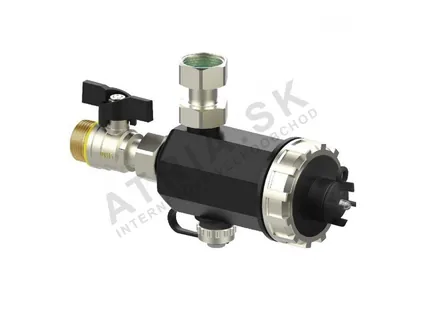
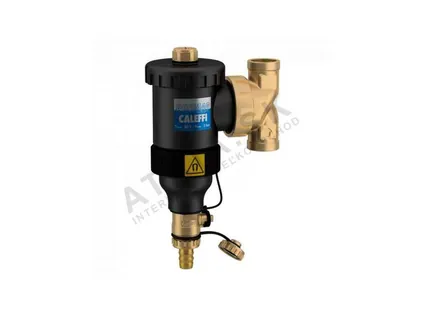
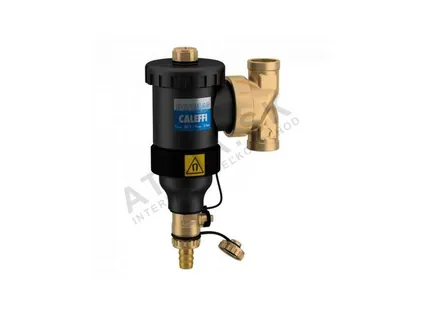
The magnetic filter is installed in the return pipe upstream of the boiler and pump. The magnet captures ferrous particles, and with the ARAS filter the mesh also traps non-magnetic debris. Maintenance is simple: with the ARAS you remove the neodymium magnet and clean it, with the Caleffi DIRTMAG® you flush out the dirt through the drain valve with a hose connection. If you are replacing the pump in an older system, it is worth flushing the system first and fitting the filter together with the new pump.

The Caleffi DIRTMAG® is rated for a maximum operating pressure of 3 bar and a temperature of 0 – 90 °C – make sure your system does not exceed these values.
battery_charging_fullPower cut

Power cuts and a backup power supply for the pump

A circulation pump needs electricity. During a power cut, water circulation stops immediately – and with a solid-fuel boiler, that can be dangerous.

With a gas or electric boiler, a power cut switches off the heat source together with the pump, so the house simply cools down gradually. It is different with solid-fuel boilers: the fire keeps burning in the firebox, but the heat is no longer carried away to the radiators and the water temperature in the boiler rises rapidly. There is a risk of the boiler overheating, the water boiling and the heat exchanger being damaged.

The solution: an AVANSA backup power supply (UPS)

AVANSA backup power supplies are professional automatic UPS units designed to provide an uninterrupted power supply for solid-fuel boilers. When the mains fails, they switch to battery within 4 ms, keep the circulation pumps running and let the boiler cool down safely. The output voltage is a pure sine wave – the same as the mains supply in your home. When the mains comes back on, the unit recharges the battery by itself and keeps it on standby.

How to size the unit for an AVANSA pump

  • Output: a pump is an inductive load and may need up to twice its rated power when starting. For loads like this, it is therefore recommended to use no more than 50% of the UPS's rated output. A 25/6 pump with a maximum input of 93 W can thus be covered even by the 300 W model; for two pumps or the 32/8/180 model (up to 270 W at speed 3), go for a more powerful unit. If the boiler electronics are also powered, add their power input.
  • Battery: standalone units are supplied without a battery. A 12 V lead-acid battery is used (the 1050 W model needs 24 V – two 12 V batteries connected in series); gel batteries are not recommended. For optimum charging, the battery should have a capacity of at least 50 Ah; the maximum supported capacity depends on the model (e.g. 300 W up to 90 Ah, 700 W up to 150 Ah). Sets of a unit with a battery are also available.
  • Backup time depends on the battery capacity and the load. According to the manufacturer, at a load of 100 W the unit runs for approximately 3.5 hours with a 65 Ah battery, 6.5 hours with 120 Ah and 8 hours with 150 Ah. At a load of 200 W, it is approximately 2, 3 and 4 hours.
  • Location: a dry, well-ventilated place free from dust (including coal dust), out of reach of water and fuel – bear this in mind in a solid-fuel boiler room.

You will find the 300 W, 500 W, 700 W and 1050 W models, as well as sets with batteries, on the AVANSA backup power supplies page, together with a detailed guide to choosing a backup power supply for your boiler.

A UPS is well complemented by a cooling loop with a safety valve (e.g. AVANSA STS), which cools the boiler with cold water if it overheats above 97 °C. And every boiler room should also have a gas or carbon monoxide detector – see the AVANSA detectors.
boltOperation

How much electricity a circulation pump uses

A pump runs for days on end during the heating season, so even a difference of a few tens of watts adds up to hundreds of kilowatt-hours a year.

How consumption is calculated

Consumption is the pump's power input at the selected speed multiplied by the number of hours of operation. The 25/6/180 pump has a power input of 46 W at speed 1 – over 24 hours it uses 46 × 24 = 1,104 Wh, i.e. about 1.1 kWh per day. At speed 3 (93 W) this is already 2.2 kWh per day. The table below assumes continuous operation and a heating season of 200 days; actual consumption is lower if the pump is switched by a thermostat.

How to reduce consumption

  • Lowest suitable speed – if all the radiators heat up even at speed 1, you save roughly half the electricity compared with speed 3.
  • The right head – an eight-metre pump in a small house needlessly draws 145 – 270 W; where 4 – 6 m is enough, choose the 25/4 model (38 – 72 W) or the 25/6 (46 – 93 W).
  • Thermostat switching – a room thermostat or clamp-on thermostat switches the pump off when heat is not needed. With a solid-fuel boiler, however, the pump must not stop while the boiler is producing heat.
  • Summer without heating – switch the heating pump off outside the season; to keep the rotor from seizing, it is worth running it briefly from time to time.
  • A clean system – magnetite and sludge increase the resistance of both the rotor and the circuit, and the pump then needs a higher speed.
Low consumption also pays off during a power cut: the less the pump draws, the longer a backup power supply can keep it running. You will find information on backup times on the Backup power supplies page.
calculateCalculation

Approximate electricity consumption by speed

Calculation: power input × 24 hours (per day), or × 24 hours × 200 days (heating season). Values for speed 1 / 2 / 3.

ModelPower input (W)Consumption per day (kWh)Per 200-day season (kWh)
AVANSA 25/4/130, 25/4/18038 / 53 / 720.91 / 1.27 / 1.73182 / 254 / 346
AVANSA 15/6/130, 25/6/130, 25/6/180, 32/6/18046 / 67 / 931.10 / 1.61 / 2.23221 / 322 / 446
AVANSA 25/8/180145 / 170 / 1823.48 / 4.08 / 4.37696 / 816 / 874
AVANSA 32/8/180150 / 210 / 2703.60 / 5.04 / 6.48720 / 1,008 / 1,296
AVANSA CP 15-1.5 (DHW circulation)250.60 when running 24 h, 0.10 at 4 h219 / 37 for the whole year (365 days)

This is an approximate calculation based on the power input stated by the manufacturer and continuous operation. If the pump is switched by a thermostat or timer, actual consumption is lower.

buildMaintenance

Maintenance and the most common faults of a circulation pump

A three-speed wet-rotor pump needs no regular servicing, but a few simple checks will significantly extend its life.

Before the heating season

  • Check the system pressure on the boiler pressure gauge and top up the water if necessary.
  • Bleed the radiators and, with underfloor heating, the manifold – air is the most common cause of noise.
  • Clean the magnetic filter if there is one in the system.
  • Look at the pump's unions – traces of water or limescale reveal a leaking seal.

After the summer shutdown

If the pump stood idle all summer, deposits around the rotor can seize it. The motor then hums but the water does not circulate. Disconnect the power and follow the pump's manual, or call a service engineer. Prevention is simple: run the pump briefly from time to time in summer and fit a filter in the system that catches magnetite before it reaches the pump.

When it is better to replace the pump

If the pump hums even after bleeding, loses performance, water leaks from the terminal box or it keeps seizing, replacement is usually more sensible than repair. When replacing, keep the same installation length and thread, use new seals and flush the system. The step-by-step pump replacement guide explains how, and you will find more tips in the AVANSA advice centre.

warningTroubleshooting

Circulation pump faults – cause and solution

What is happeningPossible causeWhat to do
The pump does not run at allno power supply, the thermostat is not switching it, seized rotorcheck the circuit breaker and socket and the thermostat setting; for a seized rotor follow the manual or call a service engineer
The pump runs but the radiators are coldair in the pump or system, closed valves, low speedbleed the system, open the valves, switch up one speed
It hums, rushes or gurglesair, speed too high, low system pressurebleed the system, reduce the speed, top up the water
Distant radiators or circuits are lukewarminsufficient flow, system not balancedhigher speed, balance the valves or flow meters on the manifold
Dripping from a unionold or damaged sealreplace the seals, tighten the nuts with care
Does not start after summerdeposits and magnetite around the rotorfree it as described in the manual, flush the system, fit a magnetic filter
The solid-fuel boiler overheats during a power cutthe pump has no power supplyAVANSA backup power supply, cooling loop

Leave work on the electrical wiring and on the boiler to a qualified professional.

play_circleVideo

The AVANSA 25/6/180 circulation pump on video

helpQuestions and answers

Frequently asked questions about AVANSA circulation pumps

What does the designation AVANSA 25/6/180 mean?
The first number is the nominal bore of the pump ports (DN25), the second is the head in metres (6 m) and the third is the installation length in millimetres (180 mm). The 25/6/180 model therefore has a 6/4" connection thread, a 6 m head and a distance of 180 mm between the ports.
Which AVANSA pump will replace my old pump, for example a Grundfos UPS 25-60?
Pumps from different manufacturers have different performance curves, so there is no 1:1 catalogue replacement. Make your choice based on three figures: installation length (measure 130 or 180 mm), connection (DN25 = 6/4" thread) and head. A designation such as 25-60 usually means a DN25 bore and a head of around 6 m – so with a length of 180 mm compare it with the AVANSA 25/6/180, and with 130 mm with the 25/6/130. Also check the power input and flow rate on the rating plate. If you are unsure, send a photo of the rating plate and the measured length to info@atria.sk or call our technicians on +421 917 133 664.
Can I fit a shorter 130 mm pump instead of a 180 mm one?
Only by modifying the pipework or using an extension piece, which adds extra joints. It is simpler and more reliable to buy a pump with the same installation length – AVANSA offers models in both lengths. A longer pump will not fit into a shorter gap without reworking the pipework.
What head do I need for a family home?
The head must cover the pressure losses of your circuit – these depend on the length of the pipework, the number of radiators or circuits and the resistance of the fittings. A pump with a head of up to 6 m is usually sufficient for an ordinary family home, while 8 m is chosen for larger or multi-zone systems. If in doubt, have a heating engineer size the flow rate and head.
Is an AVANSA pump also suitable for underfloor heating?
Yes, AVANSA circulation pumps are used in both radiator and underfloor heating circuits. Underfloor heating has higher resistance because of its long loops and manifold, so a 6 m head is generally chosen, and 8 m for extensive areas. The AVANSA TH 2A clamp-on thermostat is used in underfloor heating as a safety thermostat that switches the pump off – more on the Thermostats page.
Which speed should I set the pump to?
The lowest speed at which all radiators or circuits heat up evenly. Start at speed 1, and if the most distant radiator stays lukewarm, switch up one setting. A lower speed saves electricity (for the 25/6 models it is 46 W compared with 93 W at speed 3) and is quieter.
Why is the pump humming or the water gurgling in the system?
Most often there is air in the system or in the pump – bleed the radiators and the pump according to the instructions. Noise in the valves can also be caused by too high a speed; other possible causes are low system pressure or magnetite clogging the rotor. A magnetic filter helps against sludge.
Is an AVANSA circulation pump suitable for circulating hot water?
For circulating domestic hot drinking water, use the AVANSA CP 15-1.5 circulation pump with a brass body, 25 W power input and a G 1/2" connection. The 15/…, 25/… and 32/… circulation pumps are designed primarily for heating circuits.
Do I need a backup power supply for my pump?
With a solid-fuel boiler, we strongly recommend one. During a power cut, circulation stops but the fire keeps burning in the boiler, with a risk of overheating. The AVANSA backup power supply switches to battery within 4 ms and keeps the pump running until the boiler has cooled down safely. For a 25/6 pump (max. 93 W), even the 300 W model is sufficient – more on the Backup power supplies page.
How long can a pump run on a backup power supply?
That depends on the battery capacity and the load. According to the manufacturer, at a load of 100 W the unit runs for approximately 3.5 hours with a 65 Ah battery, 6.5 hours with 120 Ah and 8 hours with 150 Ah. A pump at a lower speed draws less power, so the backup lasts longer.
How much electricity does a circulation pump use over a heating season?
With continuous operation for 200 days, the 25/6/180 model uses approximately 221 kWh at speed 1 and approximately 446 kWh at speed 3. The economical 25/4 models come to 182 – 346 kWh, and the eight-metre 25/8/180 and 32/8/180 to 696 – 1,296 kWh depending on the speed. You will find an overview in the electricity consumption table.
What is the difference between the AVANSA 25/6/180 and 32/6/180 pumps?
Performance-wise they are the same: 6 m head, power input 46 / 67 / 93 W, max. flow 55 l/min and installation length 180 mm. They differ in nominal bore and thread – the 25/6/180 has DN25 with a 6/4" thread, the 32/6/180 has DN32 with a 2" thread. Choose according to the unions you have in your boiler room.
Can a circulation pump be installed in a vertical pipe?
Yes, provided the motor shaft stays horizontal and the arrow on the body points in the direction of water flow. Do not install the pump with the motor facing up or down, and the terminal box should not face downwards so that water cannot run into it.
Up to what water temperature is an AVANSA pump suitable?
AVANSA circulation pumps are designed for a medium temperature of -10 to +110 °C and a maximum working pressure of 10 bar; for the 15/6/130 model, the manufacturer states a maximum temperature of 120 °C. The CP 15-1.5 recirculation pump operates in the range 5 – 95 °C.
What should I do if the pump does not start after the summer shutdown?
Most often the rotor is seized by deposits. Disconnect the power and follow the pump's manual, or call a service engineer. In future, running the pump briefly from time to time in summer and a magnetic filter in the return line will help.
Does the circulation pump belong on the flow or the return?
Both positions are possible – it depends on how the system is connected and on the boiler manual, and with solid-fuel boilers also on the boiler manufacturer's recommendation. Always observe the flow direction shown by the arrow, a horizontal shaft and shut-off valves before and after the pump.

Not sure which pump to choose?

Send us a photo of your old pump's rating plate and its installation length – we will recommend a suitable AVANSA model. Technical questions: +421 917 133 664, e-mail info@atria.sk. Installers and resellers can buy on wholesale terms via atria-europe.com. You will find more tips in the Advice section and an overview of all AVANSA products on the home page.

smart_displayVideo

Product videos

Short videos showing the products, installation and settings.

descriptionPDF

Manuals and documents to download

User manuals, technical data sheets and declarations of conformity for the products on this page (PDF).

AVANSA 25-4/130 - circulating pump, connection thread 6/4"picture_as_pdfDeclaration of Conformity (217 kB)
AVANSA 25-4/180 - circulating pump, connection thread 6/4"picture_as_pdfDeclaration of Conformity (217 kB)
AVANSA 25-6/130 - circulating pump, connection thread 6/4"picture_as_pdfDeclaration of Conformity (217 kB)
AVANSA 25-6/180 - Circulation Pump, 6/4" Connection Threadpicture_as_pdfDeclaration of Conformity (217 kB)
AVANSA 25-8/180 - circulating pump, connection thread 6/4"picture_as_pdfDeclaration of Conformity (217 kB)
AVANSA 32-6/180 - circulating pump, connection thread 2"picture_as_pdfDeclaration of Conformity (217 kB)
AVANSA 32-8/180 - circulating pump, connection thread 2"picture_as_pdfDeclaration of Conformity (217 kB)
support_agentATRIA

Have a question? Write to us

Our technician usually replies on the same working day.

call+421 917 133 664 · mailinfo@atria.sk

By sending you agree to the processing of your data for the purpose of replying. Privacy